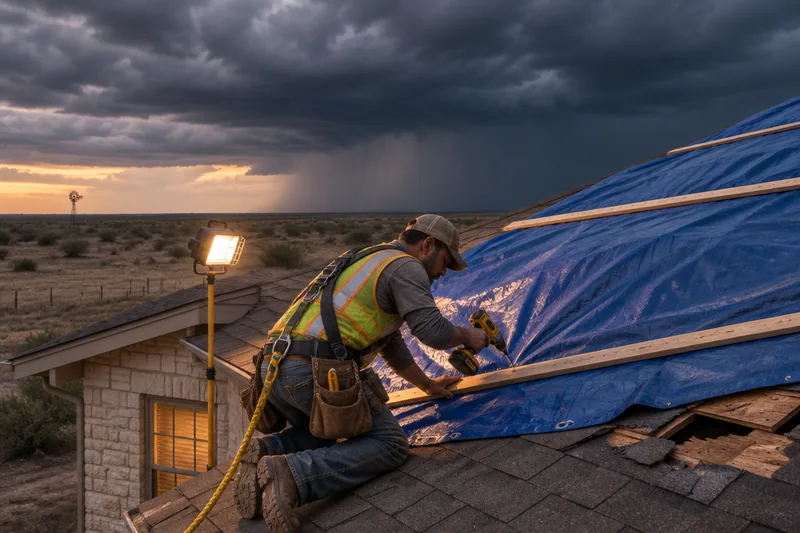
What counts as a roofing emergency?
A roofing emergency is any situation where water, wind or structural damage is getting worse by the hour. The aim of an emergency visit is not a perfect repair; it is to stop further damage to the inside of the house so that the permanent repair can be planned properly.
- Water pouring or dripping steadily through a ceiling or light fixture.
- A tree limb, sign or other debris through the roof.
- Large areas of shingles or decking torn away by wind.
- A skylight shattered by hail.
- A sagging section of roof or ceiling.
- Exposed decking with more rain in the forecast.
What happens when you call
When you call the number on this page, the call is answered by a participating independent roofer in the Lubbock area. Describe what you see: where the water is, how big the opening is, whether anyone is at risk. They will tell you what they can do and when. During a regional storm many homes need help at once, so arrival times vary, and an honest provider will tell you if they cannot reach you quickly.
How emergency tarping works
Making it safe
The roofer checks that the structure is safe to walk and that there are no live wires in contact with the roof. Wet, hail-covered or windy conditions can make roof work dangerous, and a responsible crew will wait or work from a ladder when needed.
Covering the opening
A heavy tarp is laid over the damaged area and extended over the ridge where possible so water cannot run underneath. It is held by wooden battens screwed through the tarp into the decking, rather than by bricks or loose weights that blow off. Smaller openings may get underlayment and a temporary patch instead.
Recording the damage
Before and after photos are taken. These matter for an insurance claim, and many policies expect you to take reasonable steps to prevent further damage, which emergency tarping does.
| Emergency visit | Scheduled repair | |
|---|---|---|
| Goal | Stop water and further damage now | Restore the roof properly |
| Typical work | Tarp, temporary patch, debris removal | Replace shingles, decking, flashing |
| Timing | As soon as safely possible | Planned after inspection and any claim |
| How long it lasts | Weeks, not years | The life of the roofing |
What affects the cost and time?
Size of the opening, roof height and pitch, time of night, weather and how many calls the provider is handling all change the timing and cost. Ask what the emergency visit includes and whether it is billed separately from the permanent repair before work starts.
What to do while you wait
- Get everyone away from sagging ceilings and keep pets and children out of wet rooms.
- Turn off electricity to any area where water is reaching fixtures or outlets, at the breaker if it is safe to reach.
- Catch water in buckets and move furniture, rugs and electronics.
- Photograph the damage inside and outside, from the ground.
- Do not climb onto the roof in wind, rain, lightning or darkness.
- Call your insurance company to report the loss once everyone is safe.
After the emergency
A tarp is a short-term fix. Sun and wind in Lubbock break down tarps quickly, so schedule the permanent repair or replacement as soon as the scope and any insurance claim are settled. Keep receipts for emergency work and any supplies you bought, since some policies reimburse reasonable costs to protect the property.
Frequently asked questions
Is your phone line really answered 24/7?
Yes, the line is open around the clock. Calls are answered by a participating independent roofing provider, and how soon a crew can come out depends on that provider, the weather and storm demand.
How long does an emergency roof tarp last?
A well-installed tarp can protect a roof for several weeks, but sun and wind wear it down. It is a bridge to the permanent repair, not a substitute for it.
Will insurance pay for emergency tarping?
Many homeowners policies cover reasonable steps taken to prevent further damage after a covered loss, but terms vary. Keep receipts and photos and ask your insurer.
Should I call my insurer or a roofer first?
Make the home safe and stop the water first, which usually means calling a roofer. Report the loss to your insurer as soon as you reasonably can after that.
Can a roofer tarp my roof in the rain?
Sometimes, but lightning, high wind and slick surfaces make roof work dangerous. A responsible roofer may wait for a safe window and help you protect the inside of the house in the meantime.