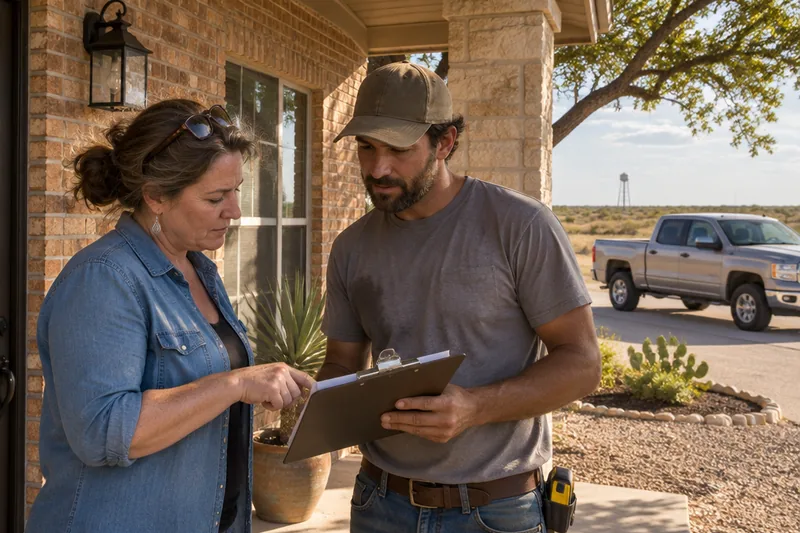
Texas does not license roofers
Unlike electricians and plumbers, roofers in Texas do not need a state license. The Texas Department of Licensing and Regulation does not regulate roofing contractors, and bills to create a state roofing license, including one considered in 2025, have not become law. The Roofing Contractors Association of Texas offers a voluntary licensing program that requires insurance and exams, but it is optional. Some cities, including Lubbock, require contractors to register with the building official before permits are issued.
This means the burden of checking a roofer falls on you. The good news is that the checks are straightforward.
The checklist
1. Insurance
Ask for a certificate of general liability insurance, and ask whether the company carries workers' compensation or another injury policy for its crew. If a worker is hurt on your property and the contractor has no coverage, it can become your problem. Call the insurer listed on the certificate to confirm it is current.
2. Local presence
Get a physical address and a local phone number. A roofer who will be around next year is more likely to honor a workmanship warranty.
3. Registration and permits
The City of Lubbock requires contractors to register with the building official before it issues permits. Ask whether your job needs a permit and confirm the roofer will pull it. In other towns, ask the city what applies.
4. A written scope and contract
The contract should state exactly what will be removed and installed: materials and product names, underlayment, flashing, vents, drip edge, decking replacement terms, cleanup, and the payment schedule. If the work will be paid with insurance proceeds and exceeds $1,000, Texas law requires the contract to include a notice about the deductible.
5. Warranty in writing
Ask what the manufacturer's warranty covers and what the roofer's workmanship warranty covers, and for how long. Get both in writing.
6. References and photos
Ask for recent local jobs you can drive past, and look at the roofer's own photos of their work.
7. Voluntary credentials
An RCAT license or a manufacturer certification is not required, but it shows the roofer has met additional standards. Ask, and verify with the issuing organization.
Storm-chaser warning signs
After major hail, crews from out of state often arrive in Lubbock and the surrounding towns. Some do good work and leave. Others take deposits and disappear, do poor work, or leave homeowners with problems when the crew is gone. Watch for these signs:
| Warning sign | Why it matters |
|---|---|
| Offers to waive, pay or absorb your deductible | Illegal in Texas under Business and Commerce Code section 27.02 |
| Offers to handle or negotiate your claim with the insurer | A contractor doing the work cannot act as your public adjuster under Insurance Code section 4102.163 |
| Pressure to sign today | A reliable roofer will give you time to read the contract |
| Large cash deposit before materials arrive | You may lose the money if the crew leaves |
| No local address or out-of-state plates only | Hard to reach for warranty problems |
| Vague contract with no materials listed | You cannot hold them to a standard |
| Asks you to sign over your insurance check | You lose control over payment for the work |
Get more than one opinion on big jobs
For a full replacement or a large insurance job, getting a second inspection is reasonable and common. Compare the scope, not just the price: one estimate may include new flashing, drip edge and decking allowances while another leaves them out. Ask each roofer to explain the difference. If one roofer finds far more damage than another, ask both to show you photos of the same slopes. A trustworthy roofer will welcome the comparison, explain their reasoning in plain language, and give you time to decide without pressure.
Questions to ask before you sign
- Can I see your certificate of insurance?
- Are you registered with the city, and will you pull the permit?
- What exactly will you replace, and with what products?
- How do you handle rotten decking found after tear-off, and at what price?
- What is your payment schedule?
- Who will be on site supervising the crew?
- What workmanship warranty do you provide, in writing?
- Will you complete TDI Form PC068 if the product is impact-rated?
Your rights during an insurance job
In general you choose who repairs your roof. If your insurer suggests a preferred contractor, read your policy and ask what the terms are before you agree. Keep copies of everything: the contract, invoices, photos and correspondence. If you have a complaint about a contractor's business practices, the Texas Attorney General's consumer protection division accepts complaints, and the Texas Department of Insurance lists a hotline for reporting deductible violations.
How this site fits in
Roof Repair Lubbock TX connects you by phone with independent local roofing providers. We do not employ the roofers and cannot vouch for their work, so the checks above apply to anyone you speak with, including the provider who answers your call. Ask the same questions, verify their insurance, and get everything in writing.
When you are ready for an assessment, our roof inspection page explains what a thorough inspection includes.
Frequently asked questions
Does Texas require roofers to be licensed?
No. Texas has no state roofing license. The Roofing Contractors Association of Texas offers a voluntary license, and some cities require contractor registration before issuing permits.
Is it legal for a roofer to waive my insurance deductible in Texas?
No. Texas law makes it an offense for a contractor to pay, waive, absorb or rebate a policyholder's insurance deductible.
Can a roofer act as my insurance adjuster?
Not if they are doing the work on your property. Texas Insurance Code section 4102.163 prohibits it.
How much deposit should I pay a roofer?
Payment terms vary. Be cautious of large cash deposits before materials are delivered, and make sure the payment schedule is in the written contract.
Where can I report a dishonest contractor in Texas?
You can file a consumer complaint with the Texas Attorney General. The Texas Department of Insurance also lists a number for reporting deductible violations.