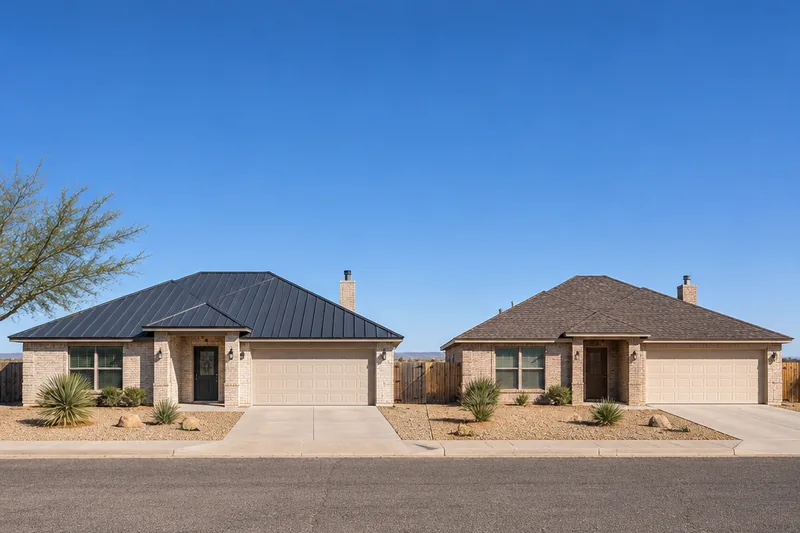
The South Plains test
A roof in Lubbock has to handle more than most. Spring hail, strong wind from thunderstorms and fronts, intense summer sun, and winter cold snaps all take a toll. Both metal and asphalt shingles can work well here, but they handle these stresses differently. The right choice depends on your priorities, your budget, and the style of your house.
Side-by-side comparison
| Factor | Metal roof | Asphalt shingles |
|---|---|---|
| Hail | Resists cracking; can dent, sometimes cosmetically. Some products are UL 2218 Class 4 | Standard grades bruise and crack; Class 4 impact-resistant lines available |
| Wind | Interlocking panels shed wind well when fastened correctly | Performance depends on nailing and seal strength |
| Heat | Reflective finishes can reduce heat gain | Absorb more heat; attic ventilation matters |
| Service life | Generally long | Shorter, especially with frequent hail |
| Upfront price | Higher | Lower |
| Repairs | Panel matching can be harder; fasteners need periodic attention | Simple to repair; matching depends on product availability |
| Noise | Can be louder in hail and rain without solid decking and insulation | Quieter |
| Look | Modern or rural; many profiles and colors | Traditional; most common look in town |
Hail: the biggest question in Lubbock
Hail is where the two differ most. A standard asphalt shingle can be bruised or cracked by hail around an inch across, and the damage leads to leaks over time. Metal is less likely to crack or puncture, but it can dent. Whether a dent is a problem depends on whether it affects the roof's ability to keep water out. A dent that cracks the paint, opens a seam or damages a fastener is functional damage. A dent that only changes the look may be considered cosmetic.
This distinction has insurance consequences. Some policies limit or exclude coverage for cosmetic damage to metal roofs. Before choosing metal, read your policy or ask your agent how it treats metal roof hail damage.
For shingle roofs, Class 4 impact-resistant shingles narrow the gap. Texas requires insurers to offer premium credits for roofs rated under UL 2218, and Class 4 gets the highest credit. See our Class 4 shingle guide.
Wind
Properly installed metal panels shed wind well, but loose fasteners and trim are weak points. On shingle roofs, the adhesive seal and the nailing position determine wind resistance; shingles nailed too high, or whose seal never set, are the ones that blow off. On the South Plains, installation quality matters as much as the material.
Heat and energy
Lubbock summers can be very hot, and roofs bake under clear skies. Light-colored or reflective metal finishes can reflect more of the sun's energy, which may reduce attic heat. Shingles absorb more heat, so good attic ventilation is important to protect the shingles and reduce cooling demand. Reflective shingle options also exist.
Noise and comfort
People often worry that metal roofs are loud. Over solid decking with underlayment and attic insulation, rain and hail noise is reduced considerably. Metal installed over open purlins, as on many barns, is much louder.
Repairs and upkeep
Shingle roofs are simpler to repair: a damaged shingle can be replaced, though matching may be imperfect. Metal roofs need occasional fastener checks, especially exposed-fastener systems whose rubber washers degrade in sun. Replacing a single panel requires a matching profile and color. Our metal roof repair page covers the common issues.
Which is right for your home?
Metal may suit you if
- You plan to stay in the house a long time.
- You want a roof that resists cracking and sheds wind well.
- The style suits your house or neighborhood, and any HOA allows it.
- You have confirmed how your insurance treats cosmetic damage.
Shingles may suit you if
- You want a lower upfront cost.
- You prefer the traditional look common in Lubbock neighborhoods.
- You want simple, familiar repairs.
- You choose impact-resistant shingles to improve hail performance.
Resale and neighborhood fit
In Lubbock neighborhoods, asphalt shingles are the most familiar look, and many buyers expect them. Metal is common on rural homes, barns and newer custom houses, and a well-chosen standing seam profile can suit many styles. If you are in a subdivision with a homeowners association, check whether metal roofing is allowed and whether colors need approval. If you plan to sell within a few years, a new impact-resistant shingle roof may appeal to the widest range of buyers, while metal tends to reward owners who stay for the long haul.
Questions to ask a roofer
- What UL 2218 class does this product carry?
- How will it be fastened, and what wind rating does that installation provide?
- What underlayment and decking will be used?
- How will you handle ventilation?
- Will you complete TDI Form PC068 if the product qualifies?
Call any time to reach a local roofer who can talk through metal and shingle options for your home.
Frequently asked questions
Is a metal roof better than shingles for hail?
Metal resists cracking and puncturing better than standard shingles, but it can dent. Class 4 impact-resistant shingles also perform much better than standard shingles. Check how your insurance treats cosmetic dents on metal.
Are metal roofs loud in the rain?
Over solid decking with underlayment and insulation, noise is much lower than many people expect. Metal over open framing, like many barns, is louder.
Do metal roofs keep houses cooler in Lubbock?
Reflective metal finishes can reduce heat gain from the sun, which may lower attic temperatures. Ventilation and insulation also play a large part.
Can I put a metal roof over my shingles?
It is sometimes possible, depending on codes and the condition of the existing roof. A tear-off allows the decking to be inspected. Ask a roofer what applies to your home.
Does homeowners insurance cover hail dents on metal roofs?
It depends on your policy. Some policies limit or exclude cosmetic damage to metal roofs. Read your policy or ask your agent before choosing metal.