The short answer
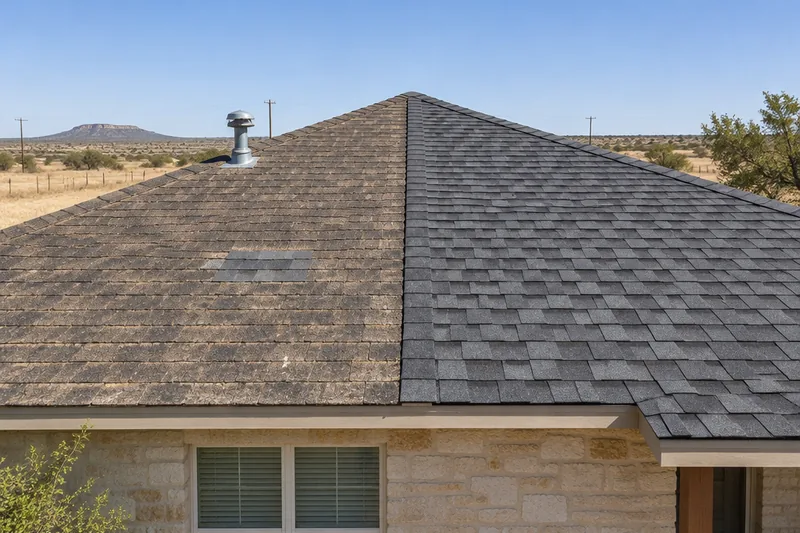
Repair makes sense when damage is limited to one area, the rest of the roof is in good condition, and the materials can still be matched. Replacement makes sense when damage is spread across the roof, the shingles are brittle or worn, the decking is failing, or repairs keep recurring. Most decisions in Lubbock come down to hail: how much of the roof it hit, and how old the roof was when it did.
Five questions that decide it
1. How widespread is the damage?
A few missing shingles from wind, or a cracked pipe boot, are classic repairs. Hail hits on every slope are different. Patching every bruise is impractical and leaves a roof full of compromised shingles. Many roofers judge hail damage slope by slope, using test squares to count hits.
2. How old is the roof, and what condition is it in?
Age alone is not the deciding factor, but condition is. Strong South Plains sun dries asphalt shingles, and older shingles can crack when a roofer lifts them to slide in a replacement. If the shingles around a repair break as it is made, the repair creates new damage.
3. What is the decking like?
Soft, sagging or water-stained decking, seen from the attic, means water has been getting in for a while. Replacing shingles over bad decking traps the problem. Replacement lets the roofer inspect and replace decking across the roof.
4. How many layers are on the roof?
Building codes limit the number of roofing layers. If there are already two layers, a new overlay is usually not an option, and any significant work means a tear-off.
5. Can the materials be matched?
Shingle colors fade and product lines are discontinued. A repair on a slope facing the street may stand out. If an acceptable match is not available, replacing the whole slope or the roof may be the cleaner answer.
Comparison: repair versus replacement
| Repair | Replacement | |
|---|---|---|
| Suits | Limited damage on a sound roof | Widespread damage or a worn-out roof |
| Upfront cost | Lower | Higher |
| Decking inspected | Only at the repair | Across the whole roof |
| Appearance | May not match | Uniform |
| Future storms | Old shingles remain vulnerable | Chance to upgrade to impact-rated materials |
| Time | Usually hours | Usually one to a few days |
Signs it is time to replace
- Hail bruising or cracking on most slopes.
- Curling, cupping or cracked shingles across the roof.
- Bald areas where granules have worn away.
- Leaks in several places, or the same spot leaking after repairs.
- Daylight through the decking or sagging rooflines.
- Two layers of shingles already in place.
Signs a repair is enough
- A leak traced to a single pipe boot, vent or flashing detail.
- A handful of shingles lost in a windstorm, with the rest flexible and sealed.
- Scattered hail hits on a younger, impact-resistant roof that an inspection finds limited.
- Dry, solid decking in the attic.
How insurance changes the decision
If a storm caused the damage, your homeowners policy may cover repair or replacement, minus your deductible. The insurer's adjuster will decide what it considers damaged, and the payout can depend on whether your policy pays replacement cost or actual cash value. Insurance can turn a replacement you would have postponed into a sensible time to replace. Read our guide to filing a roof insurance claim in Texas for the steps and the Texas rules on deductibles.
Thinking about the next storm
A replacement is a chance to choose materials better suited to the South Plains. Class 4 impact-resistant shingles and metal roofs both offer more resistance to hail than standard shingles, and Texas requires insurers to offer premium credits for roofing rated under UL 2218. Our guides on Class 4 shingles and metal versus shingles go into the trade-offs.
A note on partial replacements
Sometimes the sensible answer is in between: replacing the slopes that took the worst damage and repairing the rest. This can work well on a younger roof where one side faced the storm. The trade-offs are matching, since new shingles may look different from weathered ones, and timing, since the older slopes will reach the end of their life sooner. If you choose a partial replacement, keep a record of which slopes were replaced and when, so you have a clear history if a later storm leads to another claim.
Getting an honest assessment
Ask the roofer to show you photos of each slope, the attic, and the specific reasons for their recommendation. A trustworthy assessment explains why, not just what. If you are unsure, getting a second inspection before a large replacement is reasonable. When you are ready, our roof replacement page describes what the work involves, and you can call any time to reach a local roofer.
Frequently asked questions
Is it cheaper to repair or replace a roof?
A repair costs less upfront. Over time, repeated repairs on a worn or widely damaged roof can cost more than replacing it, and leave the house at risk of leaks.
Can I replace just one side of my roof?
Sometimes, if damage is limited to one slope and the materials match. Insurers and roofers often assess damage slope by slope.
How do I know if my decking is bad?
From the attic, look for water stains, dark spots, soft areas and daylight. A roofer can confirm by checking from above.
Should I replace my roof before selling my home?
It depends on the roof's condition and the market. A pre-listing inspection shows buyers what they are getting and helps you decide.
Do new roofs in Lubbock need a permit?
The City of Lubbock requires contractors to register before it issues permits. Ask your roofer whether your job needs one and confirm they will pull it.