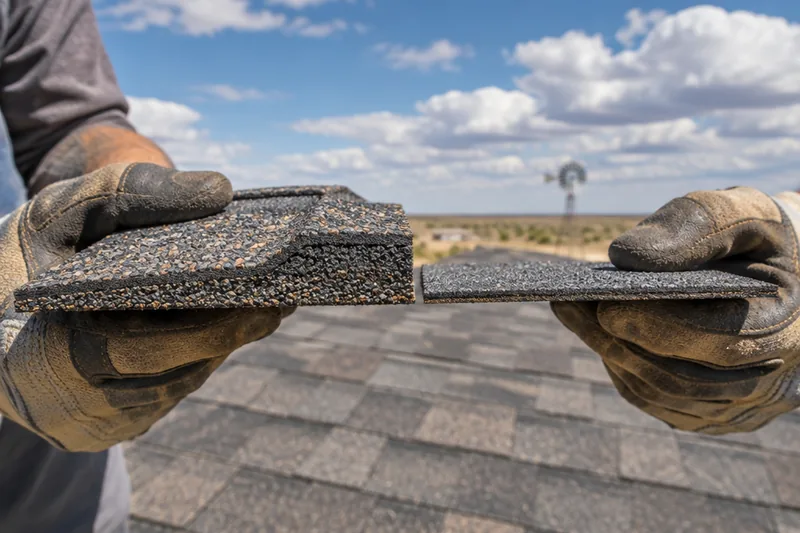
What Class 4 means
"Class 4" refers to the highest rating in UL 2218, a standard test for the impact resistance of roof coverings. In the test, steel balls of increasing size are dropped onto the roofing from set heights to simulate hail. Products are classified as Class 1, 2, 3 or 4 according to the largest ball they withstand without cracking through. Class 4 is the most resistant classification. Many other roofing products, including some metal roofing and other materials, can also earn UL 2218 ratings.
The test uses steel balls, not real hailstones, and a laboratory, not a storm. A Class 4 rating means the product resisted a defined impact under test conditions. It does not mean the roof cannot be damaged by real hail, which varies in size, density and wind-driven speed.
How Class 4 shingles are different
Impact-resistant shingles are usually thicker and more flexible than standard shingles. Some use a modified asphalt blended with polymers, often called SBS-modified, so the shingle flexes rather than cracks under impact. Others add a reinforcing layer on the back. In practice, a hailstone that would fracture a standard shingle may only dent a Class 4 shingle and bounce off.
| Class | Relative impact resistance | Texas insurance credit |
|---|---|---|
| Class 1 | Lowest rated | Eligible for a smaller credit |
| Class 2 | Higher | Eligible |
| Class 3 | Higher again | Eligible |
| Class 4 | Highest rating in the standard | Highest credit |
The amount of each credit is set by each insurance company, so the percentage varies from one insurer to the next.
The Texas insurance premium credit
Texas has required insurers to offer premium discounts for impact-resistant roofing since the late 1990s. According to the Texas Department of Insurance, to qualify, roofing materials must be tested under UL 2218, or another standard accepted by the department, and classified as Class 1, 2, 3 or 4. A Class 4 roof covering receives the highest credit, and the amount for each class is set company by company.
Insurers do not usually apply the discount automatically. Homeowners generally need to tell their insurer about the new roof and provide documentation. The Texas Department of Insurance publishes Form PC068, the Impact-Resistant Roofing Installation Form, which can be used to show that a property has impact-resistant roofing. It is typically completed by the installer. Keep a copy, along with the product packaging label or documentation that shows the UL 2218 class.
Steps to claim the credit
- Choose a product with a UL 2218 Class 4 rating, and confirm the rating on the manufacturer's documentation.
- Ask your roofer to complete Form PC068 after installation.
- Keep the product label or packaging information that shows the impact class.
- Send the documentation to your insurer and ask what credit applies.
- At renewal, check that the credit is still on your policy.
Are Class 4 shingles worth it in Lubbock?
On the South Plains, the case for impact-resistant roofing is stronger than in most of the country. Lubbock and the surrounding counties see hail most springs, and large hail is part of the regional record. A Texas study discussed in roofing industry literature found that homes with impact-resistant roofs, as rated for the TDI discount, had a meaningfully lower claims rate than other homes.
Weigh these points:
- Upfront price: Class 4 shingles usually cost more than standard architectural shingles.
- Insurance credit: Varies by insurer; ask yours before you decide, so you can compare.
- Fewer repairs: Shingles that resist smaller hail may need fewer repairs over their life.
- Not hail-proof: Very large hail can still damage Class 4 roofs.
- Policy terms: Some policies treat cosmetic damage to impact-resistant roofing differently. Read yours.
- Installation: Ratings assume correct installation to the manufacturer's instructions.
Class 4 shingles compared with metal
Metal roofing is another option for hail country, and some metal products also carry UL 2218 Class 4 ratings. Metal tends to resist cracking but can dent, and dents may be treated as cosmetic. Shingles look like a conventional roof and are simpler to repair. Our metal roof versus shingles guide compares the two in more detail.
Installation details that matter
An impact rating applies to the shingle, but the roof's performance depends on the whole system. Ask for the manufacturer's recommended underlayment, starter strips and ridge caps, since mixing products can affect the warranty. Make sure the nailing pattern follows the instructions for high-wind areas if the manufacturer offers one, because the South Plains brings wind as well as hail. Ask the crew to protect bundles from damage before installation, and keep a few spare shingles from the same production run for future repairs. Finally, photograph the product labels on the bundles; together with Form PC068, they show your insurer exactly what was installed.
Questions to ask before you buy
- What is the UL 2218 class of this specific product, and where is it documented?
- Will you complete TDI Form PC068 after installation?
- What does the manufacturer's warranty say about hail?
- What credit will my insurer give for this roof?
- Are there color or style limits in the impact-resistant line?
If you are planning a new roof, our roof replacement page explains the process, and you can call any time to reach a local roofer who installs impact-resistant shingles.
Frequently asked questions
Are Class 4 shingles hail-proof?
No. Class 4 is the highest rating in the UL 2218 impact test, but very large or wind-driven hail can still damage them. They resist damage better than standard shingles.
Do Texas insurers give a discount for Class 4 shingles?
Texas requires insurers to offer premium credits for roofing rated under UL 2218, with Class 4 receiving the highest credit. The amount is set by each insurance company.
What is TDI Form PC068?
It is the Texas Department of Insurance Impact-Resistant Roofing Installation Form, used to show that a property has impact-resistant roofing. Your installer typically completes it.
Will my insurer apply the discount automatically?
Usually not. Tell your insurer about the new roof and provide the documentation, then check that the credit appears at renewal.
Do Class 4 shingles look different?
Many look like standard architectural shingles. Manufacturers offer impact-resistant lines in a range of colors, though choices can be narrower.